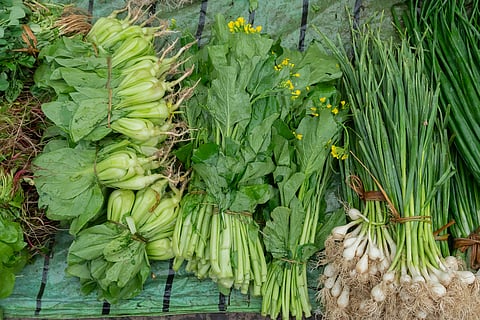

Greens are packed with vitamins, iron, and minerals, and you can enjoy them in several ways like dal or soups to reap their benefits.
Photo Credit: istockphoto

Greens are nutrient powerhouses, but most households struggle to eat enough. Indian cooking offers effortless ways to add spinach, methi, cabbage, or moringa into everyday meals like dal, parathas, chutneys, chaats and even smoothies. Prepping greens early or using pre-washed packs makes healthy eating simple, sustainable, and delicious.
"Have you eaten your greens today?" You’ve probably heard this so much that you don’t even hear it anymore. Here it is, without the nagging part.
Spinach, fenugreek, mustard greens, mint, cabbage, moringa leaves, arugula; there couldn’t be anything more nutritionally packed than these ingredients, and they are the cheapest as well.
They provide you with the fiber, iron, folic acid, calcium, vitamin C and K, and antioxidants that you just can’t seem to get enough of.
The lifestyle diseases like diabetes, hypertension, fatty liver, and heart problems are increasing and greens alone won't reverse any of that, but they are one of the more accessible and consistently evidence-backed things one can add to their diet to push back against it.
And the amounts don't need to be dramatic. One solid serving a day, done consistently. Just more than nothing, more often than occasionally.
Indian cooking is, without anyone having planned it this way, almost perfectly designed for hiding greens. The cooking times are long enough that a handful of palak or spinach doesn't stand a chance of remaining detectable.
Start with the dal or lentils: Five minutes before the dal is done, throw in a handful of finely chopped palak or methi (fenugreek). Stir it in. Done. The dal looks slightly different, tastes slightly earthier, and has just become meaningfully more nutritious. Palak dal is already a classic for good reason, but the same trick works in moong, toor, masoor, chana, and even sambhar.
The masala base: When the onion-tomato base is being blended anyway, which it often is, adding a small handful of spinach or a generous amount of coriander before blending changes nothing about the flavour and adds a layer of nutrition that completely disappears under the spices. It's already essentially what happens when making palak paneer.
Paratha dough: Paratha made with spinach, carrots and coriander, thepla with fenugreek were probably invented by someone who realized that the only way to get greens into a meal without complaints was to knead them right into the atta.
Chopped or blended to a pulp, they go in and come out of the tawa without leaving any hint of bitterness behind. If you have kids at home, this is the best way to do it.
For those who eat eggs, a bhurji or omelette absorbs greens completely. Leftover sautéed greens from the night before, a handful of roughly chopped spinach, some spring onion greens all of it disappears into the egg and contributes to a more filling breakfast.
Salads in India occupy an awkward middle ground. The traditional version, which has cucumber, tomato, onion, chaat masala is fine but not exactly exciting.
The imported version, with kale, tahini dressings and seeds that cost more than a full meal, feels completely disconnected from real life.
Neither extreme is the answer. Kachumber is already a salad. It just never got the branding. Onion, finely chopped; tomato, finely chopped; cucumber, finely chopped; green chilli, finely chopped; lime juice; salt – that is an entirely acceptable carrier for leafy vegetables.
Cabbage everywhere, it's cheap, it lasts in the fridge for over a week without any fuss, and it holds up to strong dressings in a way that soft lettuce never could.
Some ideas like an easy-to-prepare cabbage slaw with lime and mustard dressing and topped off with some roasted peanuts and curry leaves are perfect examples of recipes that you could prepare once but eat for up to three days together with other meals.
As it turns out, cabbage belongs to the same family of vegetables as broccoli and cauliflower and comes with its own set of anti-inflammatory compounds.
Chaats are an underused opportunity. Sprouts chaat is already doing a lot of nutritional work. A handful of finely chopped spinach folded into a bhel, a raw papdi chaat, or a basic sprouts bowl is completely invisible under the tamarind chutney and green chutney and sev.
The pudina (mint)-coriander chutney, one that comes with everything, is a concentrated serving of greens being consumed willingly, eagerly even, multiple times a week.
Spinach raita exists. Palak kadhi exists. Aam panna is essentially a green drink. The framework for blending greens into something palatable has been in the Indian kitchen for a very long time. It just hasn't been positioned as a health strategy because it was simply, food.
Drumstick or Moringa leaves need their own moment here because they are extraordinary and genuinely underused by anyone under fifty. Moringa also known as sahjan ke patte, is one of the most nutritionally dense things growing in Indian soil.
It is packed with iron, calcium, protein, and vitamins in concentrations that imported superfoods charge a premium for, and in most parts of India it's available at the local market for almost nothing.
Stirred into dal, kneaded into paratha dough, stir-fried with garlic and mustard seeds, or dried and added to rice , moringa leaves are one of the most accessible nutritional upgrades the Indian kitchen offers. Somewhere along the way, younger generations quietly stopped eating them. That's worth reversing.
Most people don't fail to eat greens because they lack motivation or discipline. They fail because by the time it's 8.30 pm and dinner needs to happen, washing and chopping methi is just not going to happen.
And the greens lose to whatever requires less effort , every single time. The fix isn't willpower. It's reducing the friction before the moment of decision arrives.
Wash, dry, and roughly chop greens immediately after buying them. Put them in a containers lined with a kitchen cloth. When they're already prepped, they get used. When they need work, they don't.
Keep a packet of pre-washed baby spinach in the fridge always, not as a health statement but as a practical staple. It goes into dal, into bhurji, into a smoothie, onto a sandwich, into maggi if it comes to that.
No prep. No excuse. Add a handful to whatever is already being assembled. A roll, a wrap, a sandwich, a frankie. It takes three extra seconds. Nobody notices. It becomes habit.
Green choices are plenty - spinach, fenugreek, mustard greens, drumsticks, mint, cabbage, curry leaves, cilantro, spring onions.These are not rare or costly. They are part of our cuisine, and feature prominently in hundreds of recipes.
It’s not about a complete overhaul of one’s diet. It’s only a gentle push towards the existing vegetables available in the pantry.
Tonight’s dal is an excellent way to begin. Throw in some palak. Tell nobody. That's the whole strategy.
Why should I add more greens to my diet if they won’t cure lifestyle diseases?
While greens alone do not reverse lifestyle diseases like diabetes or hypertension, they provide essential nutrients like fiber, iron, calcium, and antioxidants. Consistently adding even one serving daily can support overall health and help push back against such diseases when combined with other healthy habits.
What are the easiest ways to incorporate greens into Indian meals without changing flavors?
Greens can be seamlessly added by stirring finely chopped spinach or methi into dal minutes before it finishes cooking, blending them into the onion-tomato masala base, kneading them into paratha dough, or mixing them into scrambled eggs. These methods preserve traditional flavors and require minimal extra effort.
How can I prepare greens in advance to avoid last-minute hassle?
Washing, drying, and roughly chopping greens immediately after purchase and storing them in a container lined with a kitchen cloth reduces friction at mealtime. Keeping a packet of pre-washed baby spinach in the fridge also helps add greens quickly to any dish without extra prep.
Are greens like moringa leaves worth including compared to other superfoods?
Yes, moringa leaves are highly nutritious and readily available in India at low cost. They are rich in iron, calcium, protein, and vitamins, comparable to many expensive imported superfoods, making them an accessible and valuable addition to the diet.
What if I don’t like the taste of greens? How can I still consume them?
Blending greens into smoothies with fruits like banana and mango masks the taste while retaining nutrition. Indian cuisine also includes palatable options like green chutney, spinach raita, and palak kadhi, which incorporate greens in delicious ways familiar to many.
Disclaimer: This content is for general informational purposes only and should not replace professional medical advice. Always consult a qualified healthcare provider with any questions about your health or treatment options.
At marvelof.com, we spotlight the latest trends and products to keep you informed and inspired. Our coverage is editorial, not an endorsement to purchase. If you choose to shop through links in this article, whether on Amazon, Flipkart, or Myntra, marvelof.com may earn a small commission at no extra cost to you.