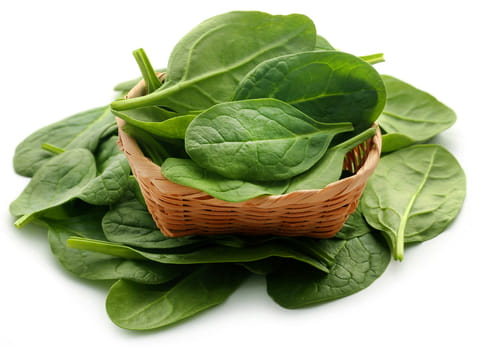

Spinach's oxalates can quietly block calcium and weaken Vitamin D’s power, so have it in moderation.
Photo Credit: istockphoto

Despite abundant sunshine, India struggles with widespread Vitamin D deficiency. Common foods like spinach, whole wheat, alcohol, fiber-rich diets, and fat substitutes can hinder absorption or activation of Vitamin D. While these foods are nutritious, excess or routine consumption may backfire. Balanced eating and mindful cooking practices can help protect Vitamin D levels.
Getting enough Vitamin D is a struggle for most Indians. You’d think a country bathed in sunshine almost year-round wouldn’t have such a problem but this isn't so.
70-90% of India’s general population, it turns out, is vitamin D deficient, according to an often-quoted review in Nutrients. Diet, sedentary lifestyle and skin tone were pointed out as culprits, but there is one that seldom gets a mention, common foods we consume daily. 1
Yes, certain foods do actively prevent your body from absorbing, or properly using Vitamin D. Of course, it's not practical to banish your kitchen to the shed, but knowing which foods cause these problems and why will make it easier to control, if you are taking a supplement because your doctor recommended it due to low vitamin D.
Most Indian kitchens will be bursting with spinach. It is a very nutritious leafy green that is bursting with fiber and iron. It is also one of the richest foods for the amount of oxalates that it contains.
Oxalates are naturally occurring compounds found in various plants, which in high quantities bind to some nutrients in the intestines so that they cannot be absorbed into your body.
For vitamin D to carry out its most important jobs it requires the presence of calcium to help it out, so if oxalates stop calcium being absorbed, vitamin D doesn't get much help.
Spinach, chard and beet greens contain the highest levels of oxalates. They do however reduce in value when cooked, bear that in mind.
This may come as a surprise to many, but your whole wheat rotis, bran cereals and other whole-grain foods are full of phytates (also called phytic acid). Phytates are often called antinutrients because, like oxalates, they bind to minerals and block their absorption into the body.
That same review on Indian Vitamin D deficiency (cited above) pointed to a diet high in phytates as a major factor in deficiency in rural populations who consume abundant sun.
These compounds are also adept at latching onto calcium and other Vitamin D- dependent minerals. Thus, a substantial portion of the calcium from these foods is likely wasted.
The good news is that soaking, fermenting or sprouting grains and legumes can help lower phytate levels significantly.
This is why many traditional cooking practices like leavening dough over a prolonged period and soaking lentils overnight made so much nutritional sense.
Even small quantities taken over a sustained period affect Vitamin D. The reason isn't obvious to most people. Once you consume Vitamin D (or it's synthesized in your skin), it's up to your liver to convert it to an active form the body can use.
Alcohol consumption, even at moderate levels, can interfere with this liver function. Studies like this one from Psychiatry Investigation (2016) report that alcohol-dependent patients not only have reduced absorption but also significantly impaired liver function for activating Vitamin D.
More than half (58%) of heavy drinkers studied had clinically significant Vitamin D deficiency. That’s a staggering number and an undeniable effect.
This is one many of us haven't even heard of, let alone thought to connect to Vitamin D levels. The fat-substitute, Olestra, can be found in some processed snack foods labeled light or diet.
Olestra is a non-digestible compound, as such, it passes through the digestive system without being absorbed. This may carry along with it fat-soluble vitamins.
One example is Vitamin D, though the absorption of vitamins A, D, E, and K may be altered in olestra consumption.
If your vitamin D supplements are not effectively increasing your vitamin D level and you commonly eat light snack foods, examine the ingredient list of your processed foods.
Fiber is unquestionably essential to proper health and functioning of the digestive tract; however, an excess consumption of fiber, particularly the insoluble fiber present in bran and husks, may lead to transit of foods through the intestine too quickly. This, in turn, could reduce the time for adequate absorption of fat-soluble vitamins.
One study published in Diabetes Care found a higher intake of fiber was correlated with a significantly decreased absorption of minerals, likely due to the cumulative effects of fiber and phytic and oxalate acids moving too rapidly through the digestive tract. Again, this isn't to discourage you from eating fiber – but to maintain balance; extreme consumption might backfire.2
There is no need to eliminate any of these foods from your diet. Context is everything. It’s a cumulative lifestyle pattern, not necessarily a single meal, that poses a problem.
Eating spinach daily, drinking on a routine basis, eating bran cereal or living off diet snacks, may take a toll on the body in the long run.
Simple changes would be to take your vitamin D with a food containing some healthy fats (nuts, fatty fish) and soak your grains/legumes before cooking, and drink less alcohol.
If you have supplemented but your levels are still low, it may be beneficial to talk to your doctor not just about your sun exposure, but your diet as well.
People generally have the most negative opinions regarding sun and its effect on vitamin D. It may be time to revisit our diet also.
How do oxalate-rich greens like spinach affect Vitamin D levels?
Oxalate-rich greens such as spinach contain high levels of oxalates, which bind to calcium in the intestines and reduce its absorption. Since calcium is essential for Vitamin D to function effectively, consuming large amounts of these greens—especially raw—may indirectly impair Vitamin D utilization. Cooking these greens can reduce oxalate content, improving calcium and Vitamin D absorption.
What is the impact of whole wheat and bran foods on Vitamin D absorption?
Whole wheat and bran foods are rich in phytates, compounds that bind to calcium and other minerals, thereby inhibiting their absorption. This reduces the minerals available for Vitamin D-dependent processes. Traditional preparation methods like soaking, fermenting, or sprouting can help lower phytate levels and improve mineral bioavailability.
Can moderate alcohol consumption affect Vitamin D activation?
Yes. Alcohol interferes with liver function, which is crucial for converting Vitamin D into its active form. Even moderate, sustained alcohol intake can impair this conversion process. Studies indicate that heavy drinkers have significantly higher rates of Vitamin D deficiency due to both reduced absorption and impaired liver activation.
Why should I be cautious about consuming 'light' snacks with fat substitutes like Olestra?
Olestra, a fat substitute found in some 'light' or 'diet' snacks, is non-digestible and can prevent fat-soluble vitamins—including Vitamin D—from being absorbed effectively. Regular consumption of such snacks may reduce the effectiveness of Vitamin D supplements or dietary Vitamin D intake by limiting its absorption.
Does eating high-fiber foods impact Vitamin D absorption, and how can I maintain balance?
Excessive intake of insoluble fiber (from bran and husks) can speed up intestinal transit time, reducing absorption of fat-soluble vitamins like Vitamin D. To maintain balance, include adequate but not excessive fiber, and consider dietary adjustments like soaking grains and legumes to enhance nutrient absorption without compromising fiber benefits.
References:
1. National Library of Medicine |Vitamin D Deficiency in India: Prevalence, Causalities and Interventions
2. National Library of Medicine |Effect of a High-Fiber Diet Compared With a Moderate-Fiber Diet on Calcium and Other Mineral Balances
Disclaimer: This content is for general informational purposes only and should not replace professional medical advice. Always consult a qualified healthcare provider with any questions about your health or treatment options.
At marvelof.com, we spotlight the latest trends and products to keep you informed and inspired. Our coverage is editorial, not an endorsement to purchase. If you choose to shop through links in this article, whether on Amazon, Flipkart, or Myntra, marvelof.com may earn a small commission at no extra cost to you.