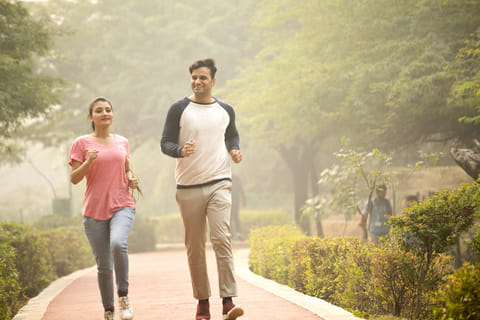

When you venture out for morning walks or runs, take caution as the heat intensifies to extreme. Consider shifting your routine and stay well-hydrated.
Photo Credit: istockphoto

Heatwaves put hidden stress on the heart, even before exercise begins. Studies show blood flow demands rise sharply with small increases in body temperature, especially in older adults and those with diabetes or hypertension. Dehydration worsens the strain. Safer habits include walking earlier or later, staying hydrated, shortening routes, and recognizing warning signs to protect health.
The regular walkers who go for their walks every day, do so in the extreme Indian heat of summer also. This is when the temperature has been above 40 °C for days; you step out at the same time every day, and maintain your usual pace as if nothing has changed.
Most people don’t pay attention to this outside the medical circles: A lot of stress is already on your heart even before you start exercising in the heat.
In June 2024 study published in the Annals of Internal Medicine, researchers from Canada monitored 61 participants - healthy young adults, healthy older adults, and older adults with coronary artery disease.
They assessed how body heating changed the blood flow to the heart muscle. The results were amazing because the increase in blood flow to the heart increased by almost twice with an increase in body temperature of 1.5 °C. More disturbingly, 35 percent of patients who were older and had coronary artery disease experienced no symptoms.1
There were no chest pains, no warning signals, only a heart working significantly harder than usual while the person felt uncomfortably hot and sweaty.
When you add walking to this, the demands on the heart are amplified further. This is the hidden risk carried by most people who leave for their morning walk during a heatwave.
The main purpose of sweating is to control the body’s temperature and when there is a heatwave, you will be sweating even if you do not move. When you step out, you may be already slightly dehydrated due to overnight fluid losses and pre-morning heat exposure.
When you become dehydrated, blood thickens. Your heart has to work harder to pump the blood around. This causes a reduction in the blood flow to the muscles and organs at a time when the demand for blood increases.
Cardiac workload is higher as heart rate increases. Hence, a brisk walking with 43°C and slight dehydration will produce significantly greater cardiac workload compared to brisk walking in cold temperatures. Thirst is always experienced post dehydration..
The risk is different for everyone, it is important to assess yours. As we get older, our body’s capacity to compensate heat stress, especially in the cardiovascular system, reduces.
This results in senior citizens being at a higher risk of developing heat disorders as per the findings of a research study conducted in 2024 and published in Annals of Internal Medicine.
Persons suffering from diabetes disease are at even higher risk since prolonged diabetes damages autonomic nerve function responsible for sweating, thereby failing to regulate body temperature effectively. Persons taking high blood pressure medications, including diuretics and beta blockers, are not aware that they are sensitive to high temperatures.
Children cannot also be overlooked. This group of persons has a higher metabolic rate compared to adults, hence releasing more body heat.
In a heatwave, morning is no longer the safe word it used to be. In many cities across North India, night time temperatures never drop below 30°C anymore. As such, 6 am is not early morning as some cities are called the 30°C city. In many crowded places, especially cities, the ground heats up a lot even before sunrise which together with humidity does not allow the body to cool down by means of sweating.
When it is above 35°C at the time you plan to walk the risk of that walk increases greatly.
It is not necessary to avoid walking altogether as being immobile has health risks too However, when there is extreme heat, it is necessary to adapt.
It would be best to attempt to take your walk between 5 am and 5:30 am or even late at night after 7 pm because at that time, the earth will have released heat absorbed throughout the day.
Make your walk shorter in time. Prefer shaded routes. Drink 400-500 ml of water before you go.
While you walk, notice warning signs such as shortness of breath, dizziness, or a racing heart.
Also, be cognizant of an unusual type of tiredness. Cease what you're doing as soon you spot any of these.
Make your morning walk a habit. What needs to change during a heatwave is the assumption that the external conditions remain unchanged.
Why is walking during a heatwave risky for the heart?
Walking during a heatwave increases cardiac workload significantly. Elevated body temperature raises blood flow demand to the heart, while heat and dehydration thicken the blood, forcing the heart to work harder. This can stress the heart, especially in people with coronary artery disease, who may not even experience warning symptoms.
How does dehydration affect morning walks in high temperatures?
Dehydration thickens blood, making it harder for the heart to pump efficiently. During heatwaves, sweating occurs even without movement, leading to faster dehydration. This reduces blood flow to muscles and organs during exercise, increasing the risk of heat-related illnesses and cardiac strain.
Who is most vulnerable to heat-related risks during morning walks?
Older adults, individuals with coronary artery disease or diabetes, people on blood pressure medications like diuretics and beta blockers, and children are at higher risk. Their bodies have reduced ability to regulate heat or compensate for cardiovascular stress, increasing the chance of heat disorders.
Is 6 am always a safe time for morning walks during summer in India?
No. In many North Indian cities during heatwaves, night temperatures remain above 30°C, and ground heat persists before sunrise. This means 6 am may no longer be sufficiently cool for safe walks, increasing heat stress risk even early in the morning.
What symptoms signal the need to stop walking during a heatwave?
Stop immediately if you experience dizziness, shortness of breath, a racing heart, or unusual tiredness. These signs indicate excessive heat stress or dehydration, requiring prompt rest and hydration to avoid serious health consequences.
References:
1. National Library of Medicine | The Effect of Heat Exposure on Myocardial Blood Flow and Cardiovascular Function
Disclaimer: This content is for general informational purposes only and should not replace professional medical advice. Always consult a qualified healthcare provider with any questions about your health or treatment options.
At marvelof.com, we spotlight the latest trends and products to keep you informed and inspired. Our coverage is editorial, not an endorsement to purchase. If you choose to shop through links in this article, whether on Amazon, Flipkart, or Myntra, marvelof.com may earn a small commission at no extra cost to you.