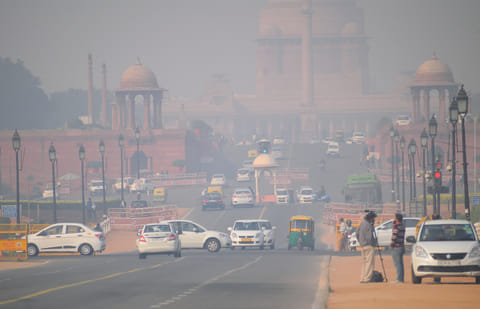

Polluted air doesn’t just affect lungs but it ca harm the whole body and with Indian cities crossing safe limits, cleaner air is essential for health.
Photo Credit: istockphoto

Recent meta-analyses reveal that prolonged exposure to pollutants like PM2.5, PM10, and nitrogen dioxide increases risks of lung, breast, pancreatic, liver, and bladder cancers. Air pollution doesn’t just harm lungs - it enters the bloodstream, triggering inflammation and cell damage across organs. With Indian cities exceeding WHO limits, corrective measures by authorities are urgently needed.
When you step outside any of the large Indian cities, be it Delhi, Mumbai, or Kanpur, you are inhaling something a lot more dangerous than just dust and smoke. The air around us, that we really have little choice but to breathe in, has quietly become one of the most significant cancer risks in our age. And the longer your exposure, the higher your odds.
This is not scare-mongering, but the science is increasingly hard to ignore.
Researchers at Indian Council of Medical Research (ICMR) published a significant meta-analysis in JCO Global Oncology (2024), which summarized data of 61 studies from many nations.1
It showed that prolonged exposure to certain pollutants (such as PM2.5, which is particulate matter released by vehicle exhaust systems and from manufacturing processes, PM10 and nitrogen dioxide) were associated with several incident and fatal cancer types. Not just lung cancer, breast cancer, pancreatic cancer, liver cancer, and bladder cancer were also included.
What is especially striking about this study is that it was not confined to a part of the world known for having the worst air pollution. Cohorts from across several continents, including those living in areas considerably less polluted than most Indian cities showed an increased risk.
While the first image that pops up in our head when we talk of air pollution and cancer is lung cancer, and understandably so as the link is frequently discussed. But, lung cancer is only one part of the larger story.
This meta-analysis, published in the Journal of Environmental Health Science and Engineering in 2024 with a population sample of 88 cohort studies, concluded that each 10mc/m3 rise in PM2.5 concentration leads to an almost 8% rise in death rate from cancer.
This risk, and one that has been long recognized, is something that must be taken seriously in a city like Delhi, where PM2.5 levels have consistently been measured at 10-15 times higher than the WHO recommended level during winter months.2
What scientists now believe to be occurring is that after a pollutant enters the lungs via inhalation, it does not simply remain in the lungs, but rather enters the bloodstream and travels around the body. Inflammation is being induced and, in turn, corrupting cell replication processes and causing cancers even in organs far removed from the lungs.
Air-pollution related cancer is not a disease triggered by a bad day of air; rather it is a consequence of several years of consistent exposure.
Cancer generally takes many years, sometimes 10 or more, to develop after an initial exposure, so connecting your diagnosis to your breathing pattern five or ten years ago can be quite difficult, nevertheless, several longitudinal studies spanning over many years have helped to establish this link.
What was also remarkable in the ICMR supported study was that it was found that the male participants experienced a greater incidence of cancer from air pollution than did the females.
While it is possible that this disparity is attributed to lifestyle patterns (e.g. a significantly higher proportion of men being smokers), even if we discount the lifestyle difference, there is still an increased risk from air pollution alone.
Everyone breathing the outer air is at risk, but those closest to major roads, industrial areas or construction activities are exposed to significantly higher pollution levels.
For North India, millions of city dwellers in areas where air quality consistently ranged from 'severe' to 'very poor' levels for days and weeks together were the most affected.
Additionally, children, the elderly and anyone working outdoors for a longer duration of time, such as those of daily wage earners, traffic police officers and street vendors, suffered a disproportionately higher cumulative exposure of pollutants over time.
In rural India, smoke generated from burning wood and biomass for cooking constitutes a significant and life-threatening hazard for those spending hours within homes lacking proper ventilation.
It will take many years for effective air quality reforms to be implemented, however, you don't have to wait:
When pollution is high and it's possible, limit your time outdoors and stay home as much as you can.
During times of extremely high pollution levels, especially during the morning and evening rush hours, do wear a suitable N95 respirator mask as opposed to a surgical mask if you absolutely must venture outside.
Purchase an air purifier with a HEPA filter; it has been shown to have a visible effect on the quality of the air inside.
If your work allows you to do so, work from home during severely polluted days if it's not an over-reaction.
If you are a smoker, stopping smoking becomes absolutely necessary, as when air pollution is combined with smoking, their effects seem to be synergistic.
Although interventions like wearing a mask in times of extreme pollution might prove to be helpful up to a point, cancer caused by air pollution is indeed a public health disaster which demands systemic solutions - stricter controls on industrial emissions, a transition to renewable energy, stricter implementation of industrial regulation, public advisories with real-time monitoring data enabling us to make informed decisions regarding our health.
The WHO themselves recently lowered the upper safe limit for PM2.5 particles indicating that former guidelines had undervalued health risks, and almost all major cities in India already surpass the earlier, lax standards.
The risk of developing cancer in heavily polluted regions due to air pollution is not something of the future; rather, it's a consequence of long term, dangerous exposure, which is increasingly clear from scientific evidence and it's a risk that public health organizations and individuals ought to be concerned about.
How does air pollution increase the risk of cancers beyond lung cancer?
Airborne pollutants like PM2.5 enter the lungs and then the bloodstream, spreading throughout the body. This triggers inflammation and disrupts normal cell replication, increasing the risk of cancers in organs such as the breast, pancreas, liver, and bladder, as established by recent meta-analyses.
What is the significance of long-term exposure to air pollution in developing cancer?
Cancer linked to air pollution develops over many years, often 10 or more. Prolonged exposure to pollutants such as PM2.5 and nitrogen dioxide steadily increases cancer risk, making cumulative exposure over time critical in assessing individual risk.
How does the cancer risk from air pollution differ between men and women?
Studies show men experience a higher incidence of air pollution-related cancers than women, partly due to higher smoking rates. However, even excluding lifestyle factors, men still face increased risk from air pollution alone, as reported in ICMR-supported research.
What practical steps can individuals take to reduce their cancer risk from polluted air?
Individuals should limit outdoor exposure during high pollution days, wear N95 respirators instead of surgical masks when outside, use HEPA filter air purifiers indoors, work from home when possible, and avoid smoking to reduce the synergistic risk with air pollution.
Why is systemic public health intervention essential to address air pollution-related cancer risks?
Air pollution-induced cancer is a widespread public health issue requiring policies like stricter industrial emission controls, renewable energy adoption, real-time air quality advisories, and enforcement of regulations. Individual actions alone cannot counter long-term exposure risks observed in highly polluted Indian cities.
Disclaimer: This content is for general informational purposes only and should not replace professional medical advice. Always consult a qualified healthcare provider with any questions about your health or treatment options.
At marvelof.com, we spotlight the latest trends and products to keep you informed and inspired. Our coverage is editorial, not an endorsement to purchase. If you choose to shop through links in this article, whether on Amazon, Flipkart, or Myntra, marvelof.com may earn a small commission at no extra cost to you.