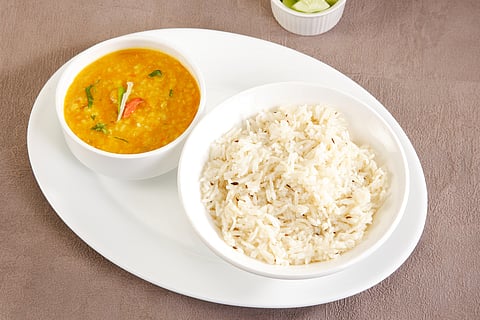

Home cooked foods like khichdi, dal-chawal, more than just food, they calm you, make you happy, and keep you healthy.
Photo Credit: istockphoto

Research reveals that comfort foods such as khichdi, dal-chawal, and homemade soups provide more than nutrition. They trigger emotional well-being, strengthen social connectedness, and support gut-brain health. With anti-inflammatory spices, balanced proteins, and soothing warmth, these meals nourish both the body and the soul.
There’s a reason why on days when life seems difficult, you feel a sudden urge for your mother’s dal-chawal. Or why eating some khichdi after a tiring week gives you a sense of relief.
You’re not imagining things, nor is this an expression of hunger alone. The craving for home-cooked meals during times of stress is one of the most underrated yet profound ways of the human mind. Modern science is slowly but surely validating what our ancestors knew intuitively.
While the connection between the food we eat and how it affects us has been recognized by contemporary research, the even more fascinating connection between comfort food and emotional well-being is now gaining traction.
A 2024 study published in the Health Promotion Journal of Australia, titled 'Nostalgic food heals for us', explored how people across different cultural backgrounds experience the connection between nostalgic food and mood.1
The findings were striking in their simplicity. Participants reported that nostalgia typically begins with a negative mood state, feelings of loneliness or meaninglessness, but acts as a mood repair mechanism, counteracting the negative state and producing a measurably improved mood. Eating food tied to memory, culture, or home didn't just distract people from feeling low. It actively shifted their emotional state.
Participants in the study described homemade meals, cultural and ethnic foods, and childhood favorites as particularly potent triggers of this response. One participant put it plainly: "I think food heals for us."
This isn't anecdote dressed as research. Now, it has been established that nostalgia is capable of impacting brain reward circuitry, which is the same part of the brain that responds to stimuli that bring pleasure. Eating comfort food is not only a reminder of happy memories, but it also triggers the same brain connections as feeling secure, warm, and loved.
In a second study, which appeared in the scientific journal Cognition and Emotion in March 2025, it was discovered that the connection between nostalgia and comfort food was directly related to feelings of increased social connectedness when considering eating foods that were personally nostalgic compared to regularly eaten foods. 2
The food becomes a vessel for the relationship. Eating it alone in a flat far from home still carries that relational warmth, because the memory is embedded in the food itself.
This may explain something that anyone who has moved cities or countries recognizes immediately - the comfort of cooking something from home. Not just eating it, cooking it. The smell of tempering cumin in ghee, the particular sound of dal simmering, the texture of khichdi that no restaurant quite replicates.
These sensory cues reach the brain before the first bite, triggering emotional responses that technically have nothing to do with nutrition.
The emotional power of these foods is real. But their physical composition also matters, and in ways that happen to align perfectly with what stressed, unwell, or emotionally depleted bodies actually need.
Khichdi: It is made with rice and lentils cooked together with turmeric and a light tempering and is easy to digest, gentle on the gut, and nutritionally balanced.
It provides complex carbohydrates that release energy slowly, plant protein from the dal, and turmeric's curcumin which has well-documented anti-inflammatory properties. When someone is ill or recovering, the body's energy is directed toward healing. A heavy meal diverts that energy toward digestion. Khichdi doesn't. It delivers nutrition without demanding much in return.
Dal-chawal: The combination of lentils and rice creates a complete amino acid profile, the building blocks of neurotransmitters including serotonin and dopamine, the chemicals most directly linked to mood regulation.
There's a reason this meal has been the staple of hundreds of millions of Indian households for generations. It wasn't designed around nutrition science. It evolved through observation of what made people feel well.
Homemade soups: Whether a simple vegetable broth, a rasam, or a mildly spiced shorba, serve a different but related function. Warm liquids soothe the vagus nerve, which runs from the brain through the gut and plays a central role in the body's stress response.
The warmth itself, independent of ingredients, has a physiologically calming effect. Add to that the hydration, the vegetables, the spices, and you have a food that addresses the anxious, depleted, or unwell body on multiple levels simultaneously.
However, the scientific realm of nutrition has seen its most exciting development through the discovery that the human digestive system can create communication pathways between itself and the human brain. The gut is referred to as the second brain since it makes almost all the serotonin in the body, but the vast array of nerves present in the gut sends messages to the brain through the gut-brain connection.
In addition, scientific findings have shown that there exists a connection between the gut microbiota and the brain through neural, inflammatory, and hormonal pathways, while a diet rich in fiber and phytochemicals increases the gut bacteria’s production of anti-inflammatory components.
The Indian cuisine at home featuring khichdi, dal, and vegetable soup is an excellent example of the natural provision of high levels of dietary fiber with complex carbohydrates and anti-inflammatory spices.
There's an important nuance here that the comfort food research keeps surfacing. The emotional benefit isn't equally available from all food, it depends heavily on personal and cultural association.
A bowl of khichdi made by a parent or partner carries emotional information that a restaurant's version does not. The act of someone making food for you or making it for yourself from a recipe you grew up watching is itself a form of care.
Researchers have found that 81% of people surveyed agreed or strongly agreed with the statement "I am confident that eating this food would make me feel better" before even consuming their comfort food suggesting that the anticipated benefit is part of the benefit. The expectation of comfort is a comfort in itself, even before the first mouthful.
This is why hospital patients often report that a home-cooked meal brought by a family member is more restorative than the same nutrients delivered by a hospital diet.
And why the first thing many people do when grieving or recovering is make the food their mother used to make. The food carries presence. It carries continuity. It says, in a way nothing else quite does: You are known, you are cared for, you have been here before and you will be okay.
Wellness culture moves fast. Every year brings a new superfood, a new dietary protocol, a new framework for eating well.
Human civilizations have been around for millennia due to the fact that some foods offer necessary nutritional value, which keeps their civilizations alive.
People receive not just nutritional value from food; they receive emotional fulfillment as well. When you next pick up a pan and begin cooking dal in a leisurely fashion, remember that you are doing something that has been scientifically proven to be true and culturally known all along. Your consumption of food feeds both your body and soul.
How do khichdi, dal-chawal, and homemade soups provide emotional comfort?
These foods evoke nostalgia and social connectedness, triggering brain reward circuitry linked to feelings of security and warmth. Studies show that eating nostalgic home-cooked meals actively improves mood by recalling memories and the relational warmth embedded in the food, even when eaten alone.
What nutritional benefits do khichdi and dal-chawal offer during illness or stress?
Khichdi is easy to digest, providing complex carbohydrates, plant protein, and anti-inflammatory curcumin from turmeric, which supports healing without taxing digestion. Dal-chawal offers a complete amino acid profile essential for producing mood-regulating neurotransmitters like serotonin and dopamine.
Why is homemade food more emotionally beneficial than restaurant versions of the same dishes?
Homemade food carries personal and cultural associations, including care embedded by the person cooking. This emotional information and the act of preparing familiar recipes enhance the comfort effect, which restaurant meals typically lack, as confirmed by research on anticipated benefits.
How do homemade soups affect the body's stress response beyond nutrition?
Warm liquids in homemade soups soothe the vagus nerve, which plays a crucial role in the body's stress regulation. The warmth provides a calming physiological effect, and combined with hydration and anti-inflammatory spices, these soups support both mental and physical well-being.
What role does the gut-brain connection play in the effects of these comfort foods?
The gut produces most of the body's serotonin and sends signals to the brain through the gut-brain axis. Foods like khichdi, dal, and vegetable soups, rich in fiber and phytochemicals, promote healthy gut microbiota, which influence brain function and mood through neural, inflammatory, and hormonal pathways.
References
1. Wiley Online | ‘Nostalgic food heals for us’: A qualitative exploration of experiences with nostalgia, food, and mood
2. Taylor & Francis | Food nostalgia and food comfort: the role of social connectedness
Disclaimer: This content is for general informational purposes only and should not replace professional medical advice. Always consult a qualified healthcare provider with any questions about your health or treatment options.
At marvelof.com, we spotlight the latest trends and products to keep you informed and inspired. Our coverage is editorial, not an endorsement to purchase. If you choose to shop through links in this article, whether on Amazon, Flipkart, or Myntra, marvelof.com may earn a small commission at no extra cost to you.