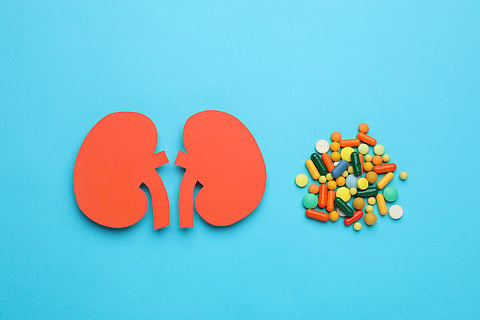

Natural doesn't always mean safe, therefore, consult your doctor before taking any natural supplements.
Photo Credit: istockphoto

Supplements may look safe, but many pose hidden risks to kidney and liver health. Turmeric capsules, green tea extract, ashwagandha, high-dose vitamin C, Garcinia cambogia, and others have been linked to toxicity and organ damage. For those with existing conditions, the margin of safety is thin. Always consult a doctor before adding supplements to your routine.
Most people are taking some form of the so-called natural supplements without consulting their doctors and also without reading past the front label.
Now, here's the thing about ‘natural’- arsenic is natural. So is mercury. The word tells you almost nothing about what a substance does once it's inside you, and nowhere is that more dangerously misunderstood than in the world of health supplements.
A 2024 study out of the University of Michigan, published in JAMA Network Open, put hard numbers to what doctors had been quietly flagging for years, millions of American adults are taking herbal supplements with documented links to liver damage, and most of them have no idea.1
Six botanicals were specifically named: Turmeric, green tea extract, ashwagandha, Garcinia cambogia, black cohosh, and red yeast rice.
For people with healthy organs, risk is manageable with the right doses. For anyone already navigating kidney disease, elevated liver enzymes, fatty liver, or hepatitis, the margin is far thinner than most supplement brands will ever mention.
Turmeric that you put in your dal or the root you grate in your tea or milk is completely harmless. That version delivers curcumin in amounts the body handles easily, spread across a meal, diluted with food.
A capsule is something else entirely. High-dose curcumin supplements deliver concentrations no plate of food ever could, and the JAMA Network Open study found turmeric to be the single most widely consumed botanical directly tied to liver toxicity.
The liver can only process so much, when curcumin floods in at supplement doses, some livers respond with inflammation that ranges from a blip on a blood test to something far more serious.
The kidney angle is just as real. Turmeric is dense in oxalate, a compound that, at elevated levels in urine, seeds calcium oxalate crystals the most common type of kidney stone.
People who've had stones before are routinely told by their doctors to drop turmeric supplements entirely. People with chronic kidney disease don't have the filtration capacity to safely offload the excess.
Green tea itself, two or three cups a day, comes with a fairly solid safety record and a decent amount of evidence behind it for cardiovascular health.
Green tea extract capsules are not the same drink, scaled up. They're a concentrated pharmaceutical-grade dose of the same compounds, particularly one called EGCG, delivered all at once to a liver that was never designed to handle that load.
The JAMA paper flagged green tea extract as one of the six botanicals most reliably linked to drug-induced liver injury. Damage that tracks directly and causally to the supplement, not to underlying disease.
The EGCG, at high concentrations, is directly toxic to liver cells. The liver metabolizes it fast in small quantities. Flood it, and some cells don't survive the process.
Someone already managing fatty liver or hepatitis shouldn't need a study to think twice here. But most people buying this supplement from a wellness store aren't thinking about their liver at all.
Ashwagandha's reputation is built partly on real evidence. For anxiety, sleep quality, and cortisol regulation in healthy people, there are legitimate studies and actual clinical data. It became the supplement that thoughtful, research-minded people felt comfortable recommending.
Then the liver injury reports started piling up. A 2023 global case review documented at least 23 individual patients who developed liver damage directly attributable to ashwagandha, a number that almost certainly understates the real figure, since supplement side effects are chronically under-reported.
Some of those cases required liver transplants. Most patients had no pre-existing liver condition. The ashwagandha was, in each case, the single variable that had changed.
The JAMA Network Open study added it to the list of botanicals raising alarm among hepatologists, doctors who spend their careers watching livers fail. For anyone who already has elevated ALT or AST levels (markers of liver stress), or who is managing any liver condition at all, taking ashwagandha without medical clearance is genuinely risky. It's not theoretical caution. The harm is documented.
Vitamin C's reputation as harmless is understandable. It's water-soluble. You pee out what you don't use. At 200 or 500 mg that's basically accurate, the excess clears quickly and causes no real issue.
At 1,000 milligrams a day and above, which is standard for a huge number of supplement brands, and which many people were taking in 2,000–3,000 mg doses during the COVID-19 years , the story shifts.
The body converts excess vitamin C into oxalate, which concentrates in urine. A 2025 study in Cureus examined exactly this: supplementation patterns that exploded during the pandemic and the downstream kidney consequences, finding a significant increase in oxalate stone risk even among people with no prior history of kidney stones.
A separate analysis in Kidney International showed that patients already known to form calcium oxalate stones who added 1–2 grams of vitamin C daily produced measurably more urinary oxalate within weeks.2
Doctors treating kidney stone patients tell them to stop vitamin C supplements, not reduce them but stop them. For someone whose kidneys are already working below capacity, the extra oxalate burden isn't a risk worth taking for an immune benefit you can get from half an orange.
The Garcinia cambogia moment has mostly passed. It was everywhere around 2012–2016, pitched as a fat-burning miracle on daytime television and stacked in display bins near pharmacy checkouts. It mostly faded because it largely didn't work.
The liver damage cases didn't fade with it. Garcinia cambogia is one of the supplements most consistently associated with serious hepatotoxicity. The culprit is hydroxycitric acid, the active compound, which at high doses damages liver cells directly.
Not in everyone. Not quickly. But in documented, verified cases, some progressing to acute liver failure, in people who were otherwise healthy before they started taking it.
Kidney risk isn't the primary concern here, but for someone whose kidneys are already compromised, anything that strains the liver indirectly adds to the filtration load the kidneys are already struggling to manage. The two organs share consequences more than most people realize.
Creatine metabolism produces creatinine, a waste compound the kidneys filter from the blood. In normal kidneys, this is routine and effortless.
In kidneys already operating at reduced capacity, even a modest increase in creatinine load matters, it distorts lab results, complicates how doctors track disease progression, and adds measurable stress to an organ already working overtime.
There's a second issue. Creatine draws water into muscle tissue, which means dehydration risk goes up. For someone with chronic kidney disease who is already managing fluid intake carefully, creatine creates a variable that's hard to control.
The supplement itself isn't the villain the compromised baseline is. But the combination is where real harm happens.
Kava does what it promises, roughly speaking. The kavalactones in it produces genuine sedation and anxiety relief, enough that several Pacific Island cultures have used it ceremonially for centuries. It's not a placebo.
The liver injury record, though, is unambiguous enough that Germany, Canada, and the UK have all moved against it at regulatory level, restricting or pulling it from sale specifically because of documented hepatotoxicity cases.
The range of documented harm runs from elevated enzymes that normalize when kava is stopped, all the way to fulminant liver failure the kind where a transplant is the only remaining option.
In people who drink alcohol regularly, the liver damage risk from kava compounds sharply, the two hit the same metabolic pathways and the combined load can overwhelm a liver that might have handled either one alone.
The pitch for red yeast rice is that it's a natural way to lower cholesterol. The reason it works is that it contains monacolin K, a compound chemically identical to lovastatin, a statin drug that requires a prescription in most countries because of its side effect profile.
When you take red yeast rice, you are taking a statin. But unmonitored one, in an unverified dose, from a source with no pharmaceutical quality control. Statins are processed through the liver, which is why doctors check liver function before starting a patient on them and recheck it during treatment.
Red yeast rice delivers the same hepatic workload without any of that oversight. In someone with existing liver disease, it can trigger the same liver inflammation that would prompt a doctor to immediately stop a prescribed statin.
And there's a rare but real kidney risk , rhabdomyolysis, a condition where muscle tissue breaks down rapidly and floods the kidneys with protein, sometimes causing acute kidney injury. It's not common, but it's well-documented with statins, and red yeast rice carries the same potential.
Most people taking these supplements are not being careless. They're being misled by labels that imply a safety standard that doesn't actually exist, by wellness culture that has spent decades insisting natural and safe mean the same thing.
If your kidney or liver function has ever been flagged as abnormal, if you're managing a chronic condition affecting either organ, or if you're on medications that those organs process talk to your doctor before adding anything from the supplement aisle to your routine.
Disclaimer: This content is for general informational purposes only and should not replace professional medical advice. Always consult a qualified healthcare provider with any questions about your health or treatment options.
References
1. Michigan Medicine | Herbal supplements with links to liver damage
2. Cureus| Potential Risk for Oxalate Nephrolithiasis
At marvelof.com, we spotlight the latest trends and products to keep you informed and inspired. Our coverage is editorial, not an endorsement to purchase. If you choose to shop through links in this article, whether on Amazon, Flipkart, or Myntra, marvelof.com may earn a small commission at no extra cost to you.