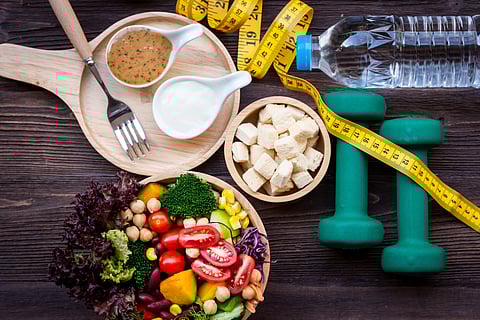

DASH is a heart‑healthy eating plan that lowers blood pressure and improves cardiovascular health.
Photo Credit: istockphoto

High blood pressure and cholesterol are rising in younger adults, and the DASH diet offers a proven food-first solution. DASH lowers blood pressure within weeks and steadily improves cholesterol. With simple swaps, more plants, less salt, lean proteins, it reduces long-term heart risk without cutting entire food groups.
High blood pressure and borderline cholesterol used to be problems people faced in their 50s or 60s. Now, clinics are seeing raised readings in office‑goers in their 30s and even college students.
Pills help, but most guidelines quietly say the same thing before every prescription -change what you eat. Among the many diet fads and hashtags, one pattern keeps showing up in serious research whenever blood pressure and cholesterol are measured carefully - the DASH diet.
DASH stands for ‘Dietary Approaches to Stop Hypertension’. It was developed in the 1990s by the US researchers to see if food alone could push blood pressure down in people who were not yet on heavy medication.
DASH diet includes:
- Plenty of vegetables and fruits every day
- Whole grains instead of refined ones
- Beans, lentils, and nuts several times a week
- Low‑fat or fat‑free milk, curd and paneer instead of full‑fat versions
- Small portions of lean meat, fish or eggs if you eat non‑veg
- Very limited processed meat, sweets, sugary drinks and salty packaged snacks
The goal is not extreme weight loss. It’s creating a daily menu that naturally brings in more potassium, magnesium, calcium and fiber and much less sodium and saturated fat than a typical fast‑food plus restaurant routine.
The original DASH and DASH‑Sodium trials were a surprise to researchers of the time, revealing that just eating this way, nothing special, could lower blood pressure in mere weeks.
Recent efforts have advanced this further. A clinical trial in Nutrients in 2024 found that the standard DASH diet had an impact on systolic and diastolic BP whereby systolic and diastolic went down by approximately 5 to 6 mm Hg.
A trial published in JAMA Internal Medicine in 2025, titled DASH4D, was conducted on adults with type 2 diabetes who were already taking tablets for high blood pressure.
This trial was based on the DASH diet but without the high sodium. At the end of the trial, systolic pressure was reduced by 4.6 mm Hg, while diastolic pressure was reduced by 2.3 mm Hg compared to those on the high-sodium diet. This occurred mostly in the first three weeks.1
While the big news is the improvement in blood pressure readings, other cholesterol factors have been shown to improve with this way of eating.
In September 2025, a study published in Nutrition, Metabolism and Cardiovascular Disease brought together data from 22 controlled studies of the DASH diet, which included over 3,500 participants.
Total cholesterol, LDL (bad) cholesterol, and VLDL all decreased in those studies, with the greatest improvement seen in studies lasting eight weeks or less.2
These improvements in LDL and VLDL were rated as high-grade.
An analysis of the original DASH‑Sodium trial, re-evaluated recently in JACC: Advances, looked at the change in long-term cardiovascular risk resulting from pairing a DASH pattern with lower sodium.3
The 10-year atherosclerotic cardiovascular disease risk score was utilized by researchers to predict the risk of heart attack and stroke in the future.
The authors were careful to say that this is risk‑score data, not direct proof of fewer heart attacks, since long‑term event trials are still limited. But it strengthens the message that food choices and salt together shape heart risk in a measurable way.
A common reaction to any named diet is, 'why not just eat a bit better?' The trouble is that a bit better means very different things to different people.
The 2025 clinical overview of the DASH diet by the US National Library of Medicine points out that, unlike vague healthy‑eating advice, DASH is built and tested as a complete pattern, not a list of single foods.
Firstly, it is constructed and validated as a whole pattern, not as a series of individual foods; secondly, it includes more plants, low-fat dairy products, and proteins while strictly controlling sodium and saturated fat content, as opposed to focusing on just one food item in isolation.
Studies have demonstrated that it can lower blood pressure more than simply adding fruit and vegetables to a normal diet.
This has now been confirmed in a new review in 2025 in Nutrients, which found that DASH-type patterns were associated with greater reductions in systolic and diastolic blood pressure than either a typical Western diet or a diet high in fruit and vegetables but low in sodium and saturated fat
Cardiologists and family physicians continue to plug DASH not because it’s trendy, but because it ticks several boxes at once:
- It has been tested in randomized trials, not just observational surveys.
- Benefits appear within weeks but also build over months and years.
- It improves multiple risk factors, including blood pressure, cholesterol, inflammation markers, rather than just one number.
- It does not cut out whole food groups or rely on expensive products.
DASH does require planning. More cooking at home, careful label reading for sodium, re‑thinking portion sizes of meat and dairy.
But unlike many fashionable diets, it’s flexible enough to adapt to Indian kitchens, which include more vegetables and pulses, whole grains like brown rice or millets, lighter use of ghee and cream, and less packaged namkeen and instant noodles.
High blood pressure and cholesterol quietly shape your odds of stroke, heart failure and kidney disease years down the line.
The accumulating research tells a consistent story. A DASH‑style plate, with sensible salt control, is one of the most reliable tools we have for pushing those risks down using everyday food.
Disclaimer: This content is for general informational purposes only and should not replace professional medical advice. Always consult a qualified healthcare provider with any questions about your health or treatment options.
At marvelof.com, we spotlight the latest trends and products to keep you informed and inspired. Our coverage is editorial, not an endorsement to purchase. If you choose to shop through links in this article, whether on Amazon, Flipkart, or Myntra, marvelof.com may earn a small commission at no extra cost to you.