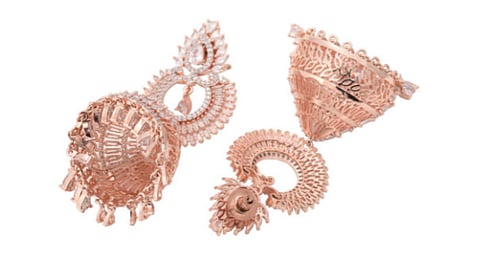

Jhumkas blend tradition, femininity, and timeless charm.
Photo Credit: Myntra.com
Jhumkas remain a timeless staple in every Indian wardrobe, effortlessly enhancing both traditional and contemporary outfits. The earrings are a must-have for any occasion. Here is a guide to why juhmkas are popular, how to style them, what to avoid and five options you can buy.
Jhumkas have long held a special place in Indian jewellery collections, seamlessly blending tradition, femininity, and timeless charm with evolving fashion trends. Whether paired with a classic saree or a modern Indo-western ensemble, these earrings continue to be a go-to accessory for those looking to elevate their ethnic wear wardrobe.
A jhumka is a traditional type of earring that women in South Asia, specifically India, wear. The word “jhumka” derives from the word “jhumki”, which refers to its distinctive bell-shaped design that resembles a small dome. It is usually made from metals like gold, silver or brass and is often embellished with intricate carvings, beads, pearls or gemstones. Women mostly wear it during festivals, weddings or special occasions, and simpler ones can also be worn on a day-to-day basis. There is a wide variety of jhumkas available in India. From temple jhumkas in South India to meenakari ones from the northern part of the country and jhumkas made of gold are popular in Bengal.
Jhumkas are suitable for every face shape, but the only thing to keep in mind is that certain styles flatter specific features more effectively. For those with round faces, longer or slightly elongated jhumkas help create the illusion of length and balance the fullness of the face. People with oval faces are the luckiest because almost every jhumka style is suitable for their face, from small, dainty ones to large and elaborate ones.
Those with a square face, jhumkas with soft curves and rounded edges work best because these soften the sharp jawline. Individuals who have heart-shaped faces should opt for medium to large jhumkas that add width near the jawline, thus balancing the narrower chin. Meanwhile, people with long or rectangular faces should choose wider jhumkas that add volume and reduce the appearance of the length of their faces.
Jhumka and chandbali are both types of Indian earrings; the difference lies in their shapes and styles. A jhumka is typically a bell-shaped, dome-like earring that hangs below the earlobe. It usually has a small stud at the top and a rounded, dangling bottom, often featuring beads, pearls, or tiny chains. Jhumkas are a great option for those who like a bit of movement, as these gently sway when you walk. These can be paired with sarees, lehengas and other traditional outfits, and are suitable for every face shape.
Meanwhile, a chandbali is a crescent or half-moon-shaped earring. These are usually broader and often feature more intricate work than jhumkas. Chandbali often features a layered design with elaborate patterns, pearls and gemstones. Such earrings are appropriate for weddings and grand occasions because of their regal appearance.
Jhumkas are having a huge fashion moment right now. These are not just available in traditional styles but also in modern designs. The most popular ones in this category are oxidised and silver jhumkas. These are super popular for casual, college or work. They have a rustic, antique look and pair beautifully with long and short kurtis or salwar kameez.
If you want something more festive and regal, then there are kundan ones, which are adorned with intricate stonework and have a rich gold finish. Pearl and floral patterns have also gained momentum among the masses. These have a soft, graceful style and are perfect for weddings and parties. Many people have also been opting for terracotta or handmade jhumkas, which is a great way to invest in some sustainable fashion.
Statement jhumkas, which feature multiple layers or ear chains, are being loved by many for weddings or special occasions. These can elevate even simple outfits. Another category of trending jhumkas nowadays is the Kashmiri jhumkas, which feature elaborate designs and small bells that make them attractive and perfect to add an oomph factor to a monochrome outfit.
Jhumkas are versatile and can be paired with a wide variety of outfits, including denim wear. However, they look the most beautiful when paired with traditional attire such as sarees, lehengas, salwar suits and kurtis. For everyday wear, opt for smaller or oxidised jhumkas that go well with simple cotton kurtis. They also add a dash of style to Indo-western outfits, like kurtis paired with jeans, crop tops paired with long skirts, or palazzo sets.
Jhumkas also go well with maxi and midi dresses. Make sure to add lightweight jhumkas, like oxidised ones. For festive occasions or weddings, when one wears heavy sarees and lehengas, intricately designed jhumkas complement these outfits best.
If you are planning to wear jhumkas every day, then the best ones are those made from lightweight, comfortable and skin-friendly materials so that they can be worn for long hours without irritation. Among the most popular choices are oxidised silver or golden, or silver-plated jhumkas, which are preferred by most because they are stylish and lightweight at the same time.
Alloy jhumkas are another good option as they are not only affordable but also light in weight and available in multiple simple designs, making them appropriate for college or office wear.
Another great option is terracotta. These are handmade, extremely light in weight and give an earthy look. Besides these, pearl or fabric-based jhumkas can be comfortable as well as elegant without being too heavy on the ears. Try to avoid heavy bridal and bulky metal jhumkas for everyday use.
If you are planning to wear jhumkas for a long period of time, here are certain things you need to keep in mind to avoid any kind of irritation or pain.
First and foremost, select a pair that is light in weight because heavier ones can pull on the earlobe and cause discomfort.
If you are someone who loves heavier designs, then use ear support patches or ear chains that will help to distribute the weight so your ears do not bear all the burden.
Make sure the earring hook or posts are smooth and hypoallergenic, as rough or low-quality metals can irritate the skin.
Avoid wearing extremely tight or heavy jhumkas for an extended period of time.
Lastly, if your ear piercings are sensitive or slightly stretched, it is better to stick to small or medium-sized jhumkas for a longer period of time.
Now, if you want some good jhumkas in your wardrobe, we have curated a list of versatile jhumkas that create a striking style statement and can be styled across multiple outfits.
Minimal yet striking, these white contemporary jhumkas feature gold plating with artificial stones and beads. Available in multiple colours, they offer flexibility for both everyday wear and festive occasions. Their lightweight design and neutral tone make them easy to pair with kurtas, Anarkalis, and even fusion outfits.
Blending modern aesthetics with ethnic elegance, these silver-plated jhumkas feature intricate floral designs and American diamond embellishments. Designed for all-day comfort, they are lightweight and suitable for long wear, making them a practical yet stylish choice. These earrings work well with Indo-western outfits, sarees, or kurta sets. Styling them with clean necklines and soft glam makeup can further enhance their appeal.
Offering a modern twist on a classic silhouette, these rose gold-toned jhumkas feature American diamond detailing that adds a touch of luxury. The soft hue makes them particularly suitable for pastel outfits and wedding ensembles. Made with brass, these earrings pair well with lehengas, sarees, or gowns, especially when complemented with subtle accessories and soft-toned makeup.
These gold-toned, stone-studded jhumkas reflect artisanal craftsmanship with a modern design. Ideal for those who prefer a minimalist yet artistic aesthetic, these jhumkas can elevate handcrafted outfits and natural fabrics. Style them with linen sarees, ethnic dresses, or Anarkalis, and keep your makeup subtle with neatly styled hair.
Floral motifs continue to dominate ethnic jewellery trends, and these jhumkas are no exception. With gold plating and intricate detailing, they bring a feminine and festive charm to any outfit. Perfect for weddings and celebrations, they pair beautifully with silk sarees, lehengas, or embroidered suits. Bold makeup and tied-up hairstyles can help complete the look.
Are jhumkas suitable for everyday wear?
Yes, if you choose the right size. Lightweight and minimal jhumkas can be comfortably worn daily to add elegance to daily kurtas, tunics, or even casual dresses.
Can jhumkas be styled with Western outfits?
Absolutely. Jhumkas pair well with Indo-western looks and can even be styled with dresses or fusion wear for a unique fashion statement.
What hairstyles work best with jhumkas?
Hairstyles like buns, braids, ponytails, or open straight hair help bring the jhumkas into focus, depending on the occasion and outfit.
Can I wear jhumkas without a necklace?
Absolutely. For those who prefer statement minimalism, it’s one of the chicest ways to style them. Bold jhumkas, especially Polki chandbalis or gemstone danglers, can carry the entire look on their own.
At marvelof.com, we spotlight the latest trends and products to keep you informed and inspired. Our coverage is editorial, not an endorsement to purchase. If you choose to shop through links in this article, whether on Amazon, Flipkart, or Myntra, marvelof.com may earn a small commission at no extra cost to you.