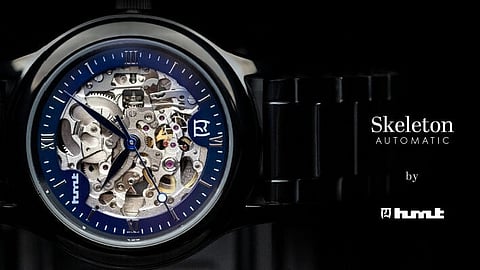

From Nehru’s vision to everyday wrists, HMT watches became India’s first love in timekeeping, an emotional legacy of craftsmanship, self-reliance, and memory.
Photo Credit: Hmtindia.com

For decades, HMT Watches wasn’t just a brand, it was a rite of passage. Born from a vision of self-reliance and powered by Indo-Japanese collaboration, HMT shaped India’s relationship with time. This is the emotional journey of how a government initiative turned into a cultural icon that adorned millions of wrists across generations.
There was a time in India when owning a wristwatch wasn’t casual, it was monumental. It meant you had arrived at a certain stage in life. It meant responsibility of family starts now. It meant adulthood for a lot of students. And more often than not, that watch came in a simple box, ticking softly, it was an HMT.
In today’s world of smartwatches and luxury brands, it’s easy to forget that timekeeping in India was once a privilege. But Hindustan Machine Tools (HMT) changed that forever. With a vision rooted in nation-building and accessibility, HMT didn’t just manufacture watches, it created memories.
From being worn by leaders like Jawaharlal Nehru and Indira Gandhi to becoming a staple in middle-class households, HMT became India’s first emotional connection with time.
Production officially began in 1962, and the first batch of watches was ceremonially released by Jawaharlal Nehru. It was a powerful moment, symbolizing India’s entry into precision manufacturing.1

In 1961, HMT set up its first watch factory in Bangalore, long before the city became India’s tech capital.
Photo Credit: Hmtindia.com
India in the 1950s was a country full of ambition but with limited industrial capacity. The government recognized the need to build domestic manufacturing strength and that’s where HMT was born.
Established in the 1950s, HMT was envisioned as more than a manufacturing unit. It was a symbol of India’s push toward self-reliance. Initially focused on machine tools, the company soon diversified into multiple sectors, eventually stepping into watchmaking.
At a time when watches were imported and expensive, the idea of producing them in India was revolutionary. It wasn’t just about convenience, it was about national pride.
HMT set up its first watch factory in Bangalore, long before the city became India’s tech capital.
Photo Credit: Hmtindia.com
In 1961, HMT set up its first watch factory in Bangalore, long before the city became India’s tech capital. This marked the beginning of a new chapter.
By 1962, production had begun. The first watches weren’t just launched, they were inaugurated by Jawaharlal Nehru himself. It was symbolic a leader of a young nation introducing a product that would define its relationship with time.
Before HMT, owning a watch was a distant aspiration, watches were expensive, scarce, and largely imported. It was something only a few could access. But HMT changed that narrative completely. It brought timekeeping within reach of everyday Indians, students, office workers, railway staff, making watches both affordable and attainable.
Wearing an HMT was never about showcasing luxury. It was about quiet pride.
HMT released its first batch of watches called 'Janata' made for the people, was inaugurated by Nehru himself.
Photo Credit: Hmtindia.com
The story of HMT begins in the early years of independent India, when industrial growth was not just an ambition but a necessity for the nation.
Established in the 1950s as Hindustan Machine Tools, HMT was envisioned as a government-backed enterprise to drive manufacturing across sectors, from tractors to heavy machinery.
Under the leadership of first Prime Minister Pt. Jawaharlal Nehru, India embraced industrialization as a path to sovereignty. HMT became one of the pillars of this vision, symbolizing the country’s move towards self-sufficiency.
Watches, though small in size, carried immense symbolic value. Timekeeping meant discipline, productivity, and modernity, qualities essential for a young nation and youth of the country finding its footing.
In 1961, HMT partnered with Citizen Watch Company, marking a defining moment in Indian manufacturing history. Over 100 Indian engineers were sent to Japan to learn the intricate art of watchmaking.
They returned not just with technical knowledge, but with a philosophy of precision and craftsmanship. Soon after, Japanese experts came to India, helping set up the first watch factory in Bangalore.
By 1962, HMT unveiled its first batch of watches most notably the iconic Janata, a timepiece truly made for the people. Inaugurated by Jawaharlal Nehru himself, this wasn’t just the launch of a product, it was a powerful statement that India could craft its own destiny, down to measuring its own time.
What followed was a remarkable journey of innovation. HMT went on to introduce several milestones in Indian watchmaking, from the country’s first automatic day-date watch to its first quartz, Braille, and ana-digi watches. With each creation, HMT didn’t just keep up with time, it helped India move forward with it.
The Famous Lalbagh Floral Clock built by HMT, it was setup around the entrance of the lalbagh at 1983.
Photo Credit: Wikimedia.com
From the 1960s through the 1990s, HMT wasn’t just popular, it was everywhere. At its peak, it controlled over 70% of the Indian watch market.
HMT watches were not just affordable they were durable, making them accessible to the common Indian. Whether you were a government officer, a factory worker, or a student, owning an HMT watch was a milestone.
Models came in simple yet elegant designs, white, black, blue, and even vibrant red dials. The iconic hand-wound watches became a daily ritual in most Indians life, winding your watch every morning was like preparing for the day ahead.
HMT watches weren’t just worn by the masses, they found their way into the highest corridors of power. Politicians, bureaucrats, and officials often wore HMT watches, making them a quiet but constant presence in Parliament.
Leaders like Jawaharlal Nehru, Indira Gandhi, Atal Bihari Vajpayee were often seen flaunting an HMT like a pride of nation.
In many ways, HMT became the “official timekeeper” of India’s governance, symbolizing punctuality and responsibility.
HMT’s operations were remarkable. Entire watch components were manufactured under one roof. The company also built housing, schools, and recreational facilities for its employees, creating self-contained townships.
At its peak, HMT employed thousands, including over 3,000 women, making it not just an industrial giant but a social institution.
HMT also produced custom watches for organizations like Bharat Heavy Electricals Limited (BHEL), fulfilling massive orders that showcased its manufacturing prowess.
The brand also shaped public timekeeping, creating floral clocks, solar clocks, tower clocks, and synchronized systems across cities. From iconic installations like Bangalore’s garden clock to everyday wrist watches in small towns, HMT ensured that time reached every corner of India.
HMT adapted to modern needs by assembling automatic watches using Citizen Miyota movements.
Photo Credit: Hmtindia.com
The late 1990s brought a shift that HMT struggled to keep up with. Once a dominant force on Indian wrists, the brand found itself at a crossroads as technology, design preferences, and global competition began to reshape the market.
With the entry of quartz watches, which was led by brands like Titan Company Limited and Timex, changed consumer expectations. These watches were more accurate, stylish, and required little maintenance.
In comparison, HMT’s mechanical watches, once cherished for their craftsmanship, began to feel outdated in a rapidly modernizing market.
Despite the challenges, HMT held on to its roots. It continued producing mechanical watches, often at a ratio of 3:1 compared to quartz, staying true to its legacy.
HMT adapted to modern needs by assembling automatic watches using Citizen Miyota movements, blending tradition with subtle modernization.
Today, HMT lives on through its admirers. HMT Vintage timepieces have gained cult status among collectors, valued as much for their emotional significance as their craftsmanship.
Owning an HMT now feels like holding a fragment of India’s past, a watch that doesn’t just tick, but tells stories of a different time.
HMT was never just a watch brand. It was a witness to India’s journey,from a newly independent nation to a modern economy. It lived on the wrists of millions, quietly marking moments that mattered.
For many, an HMT watch still sits in a drawer or on a wrist either slightly worn, or perhaps no longer ticking, but full of memories. It reminds us of a time when life moved slower, when winding a watch was a ritual, and when “Made in India” was a matter of pride.
Because in the end, HMT didn’t just measure time, it became a part of it.
What cultural significance do HMT watches hold in India?
HMT watches held deep cultural significance by marking life’s milestones such as first jobs, graduations, and weddings. They were seen as symbols of responsibility, adulthood, and trust, often passed down through generations, connecting owners to a shared narrative of India's post-independence progress.
How do HMT watches compare to quartz watches like those from Titan or Timex?
HMT watches are predominantly mechanical, prized for craftsmanship and tradition, whereas quartz watches like Titan or Timex offer higher accuracy, modern aesthetics, and less maintenance. While quartz watches appeal to contemporary users, HMT’s mechanical models cater to enthusiasts valuing heritage and manual craftsmanship.
Why do HMT watches have a cult following among collectors today?
Collectors value HMT watches for their vintage appeal, quality craftsmanship, and historical significance as symbols of India’s self-reliance era. The watches carry emotional memories and represent a nostalgic connection to a time when ‘Made in India’ was a source of national pride.
What made HMT watches popular in India during their peak?
HMT watches became popular because they were affordable, durable, and accessible to ordinary Indians. Their simple yet elegant designs and the brand’s association with self-reliance and modernity made them a symbol of discipline and progress for millions from the 1960s to the 1990s.
How did the partnership with Citizen Watch Company impact HMT?
The collaboration with Citizen Watch Company beginning in 1961 was pivotal. Over 100 Indian engineers were trained in Japan to master watchmaking. Japanese experts helped establish HMT’s first watch factory in Bangalore, enabling India to manufacture its own quality watches and launch its first batch in 1962.
How did HMT contribute to India’s industrial and social ecosystem?
HMT was a government-backed enterprise symbolizing self-reliance and employed thousands, including over 3,000 women. It manufactured entire watch components in-house and built self-sustained townships with housing, schools, and recreational facilities for employees, making it an important social institution during its peak.
At marvelof.com, we spotlight the latest trends and products to keep you informed and inspired. Our coverage is editorial, not an endorsement to purchase. If you choose to shop through links in this article, whether on Amazon, Flipkart, or Myntra, marvelof.com may earn a small commission at no extra cost to you.