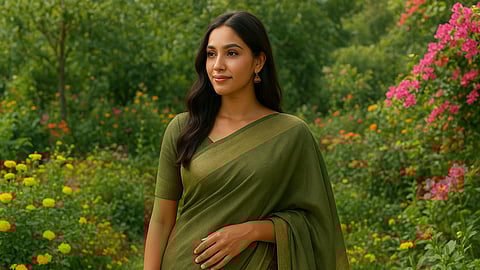

Photo Credit: AI Generated Image

In a fashion world rapidly shifting toward mindful choices, one heritage staple is quietly leading the eco-revolution: organic silk sarees. They’re luxurious, rooted in craft, and unlike many mass-made textiles they tread lightly on the planet. Today’s consumers are asking for more transparency, more responsibility, and more meaning behind what they wear. Organic silk fits right into this new narrative: timeless style paired with thoughtful sourcing.
Here’s why these sarees are becoming the new symbol of sustainable luxury.
The journey to organic silk begins long before the loom, it starts with the mulberry trees.
Organic sericulture avoids pesticides, synthetic fertilizers, and genetically modified crops. The silkworms feed on leaves grown in clean, naturally nurtured soil, creating a healthier ecosystem with richer biodiversity. This approach reduces chemical runoff, keeps nearby water bodies uncontaminated, and allows farmers to work in safer, toxin-free environments. Essentially, the fabric becomes a result of respecting nature, not exploiting it.
Ever wondered why an organic silk saree carries such earthy, nuanced tones?
The secret lies in plant-based dyes. Think marigold yellows, indigo blues, madder reds, and mineral-washed neutrals, all achieved without harsh synthetic chemicals.
Natural dyeing:
consumes less water,
produces fewer toxic effluents, and
allows leftover dye material to return to the soil as compost.
The result? Colours that feel alive, age beautifully, and carry a gentler environmental footprint.
Silk by nature is a low-waste, biodegradable fibre, but organic silk pushes that sustainability dial even further.
With fewer chemicals involved, the production process requires less water for washing and treatment. Handloom weaving, often used for organic silk relies on human skill rather than electricity-heavy machinery, drastically cutting down energy use.
In a fashion industry dominated by resource-heavy synthetic fabrics, organic silk stands out as a rare blend of luxury and low impact.
Behind every organic silk saree is a community of skilled weavers and dyers who carry centuries of knowledge. Organic silk isn’t mass-produced; it’s hand-touched, time-intensive, and rooted in craft traditions.
Choosing organic silk means:
supporting local artisans,
sustaining handloom clusters,
and keeping traditional weaving techniques alive.
In an era of fast fashion fatigue, organic silk sarees represent the growing desire to invest in pieces with soul, story, and staying power.
Beyond the ecological perks, organic silk feels different.
Free from chemical residues, it’s:
hypoallergenic
breathable
gentle on sensitive skin
You’re essentially wearing a fabric that has been grown, spun, and dyed with minimal intervention the way nature intended.
Unlike synthetic blends that linger for decades, organic silk returns to the earth.
It biodegrades gracefully, leaving behind no harmful microplastics. In a world drowning in textile waste, this alone makes organic silk a forward-thinking choice.
Because it perfectly represents where fashion is heading: towards consciousness, clarity, and craftsmanship.
Organic silk sarees aren’t a trend, they’re a shift in mindset. A quiet rebellion against fast fashion. A way to honour tradition while caring for the planet. A reminder that luxury doesn’t need to cost the earth.
When you drape organic silk, you’re not just choosing a saree.
You’re choosing a story of sustainability, a promise of purity, and a future where elegance and ethics coexist beautifully.
How is organic silk different from conventional silk in terms of environmental impact?
Organic silk is produced through chemical-free sericulture, avoiding pesticides and synthetic fertilizers, which reduces chemical runoff and water contamination. It also uses natural dyes that consume less water and produce fewer toxic effluents. Additionally, organic silk production relies on handloom weaving, lowering energy use compared to electricity-intensive machinery used in conventional silk manufacturing.
What role do natural dyes play in making organic silk sarees eco-friendly?
Natural dyes used in organic silk sarees are derived from plants like marigold, indigo, and madder. These dyes require less water, generate fewer toxic byproducts, and their residual matter can be composted, enhancing soil health. This process leads to vibrant, earthy colors that age well without the environmental harm caused by synthetic dyes.
How does buying organic silk sarees support artisans and traditional weaving techniques?
Organic silk sarees are handwoven by skilled artisans using time-intensive, traditional techniques passed down through generations. Purchasing these sarees helps sustain local artisan communities, supports handloom clusters, and preserves heritage crafts in an industry increasingly dominated by fast fashion and mechanized production.
Are organic silk sarees suitable for sensitive skin?
Yes, organic silk sarees are hypoallergenic and free from chemical residues due to their natural production processes. They are breathable and gentle on sensitive skin, making them a better choice for individuals prone to allergies or skin irritation caused by conventional chemically treated fabrics.
What makes organic silk sarees a sustainable choice in terms of biodegradability?
Organic silk is a natural, biodegradable fiber that decomposes gracefully without leaving harmful microplastics, unlike synthetic blends. Choosing organic silk sarees helps reduce long-lasting textile waste and supports circular fashion practices that minimize environmental impact.
At marvelof.com, we spotlight the latest trends and products to keep you informed and inspired. Our coverage is editorial, not an endorsement to purchase. If you choose to shop through links in this article, whether on Amazon, Flipkart, or Myntra, marvelof.com may earn a small commission at no extra cost to you.