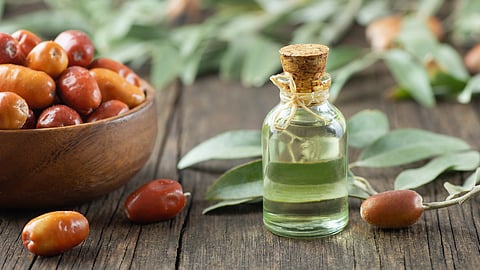

Discover how jojoba oil works like your skin’s natural sebum to hydrate, repair, and balance oil production, making it one of the best oils for glowing and healthy skin.
Photo Credit: iStock Image

Jojoba oil is a skincare powerhouse known for mimicking natural skin oils, making it ideal for all skin types. Rich in antioxidants and vitamins, it hydrates, repairs, and protects the skin barrier. From controlling acne to boosting collagen, this lightweight oil helps achieve smooth, balanced, and glowing skin with consistent use.
When it comes to natural skincare, few ingredients are as versatile and effective as jojoba oil. Unlike traditional oils, jojoba is actually a wax ester that closely resembles the skin’s natural sebum. This unique structure allows it to deeply hydrate without clogging pores or feeling greasy.
According to research published in PubMed Central, jojoba oil is rich in bioactive compounds, antioxidants, and anti-inflammatory properties that support skin health and repair.1 Healthline also highlights its ability to regulate oil production and improve overall skin texture. 2
If you’ve explored our guide on body oils, you’ll notice jojoba stands out as one of the most skin-compatible oils for everyday use.

Jojoba oil closely resembles the natural oils produced by your skin, which allows it to balance sebum levels effectively.
Photo Credit: iStock Image
Jojoba oil closely resembles the natural oils produced by your skin, which allows it to balance sebum levels effectively. When applied, it signals the skin to reduce excess oil production, making it ideal for both dry and oily skin types. Studies show this property helps prevent clogged pores and acne formation. 2
Packed with vitamin E, B-complex vitamins, zinc, and copper, jojoba oil helps protect the skin from oxidative stress and environmental damage. These nutrients also support skin repair and improve elasticity, contributing to a healthier, glowing complexion. 3
Research-backed benefits make jojoba oil more than just a trend, it’s a skincare essential.
Deep Hydration: Acts as a humectant, attracting water to the skin and preventing dryness.
Acne Control: Regulates sebum production and reduces breakouts.
Antioxidant Protection: Rich in vitamin E to fight free radicals and aging.
Anti-inflammatory Effects: Helps soothe eczema, redness, and irritation.
Wound Healing: Supports skin repair and reduces acne scars.
A clinical study referenced in dermatological literature also found that jojoba-based formulations improved mild acne and skin lesions over time, supporting its therapeutic potential. 2, 3
Jojoba oil is highly effective at locking in moisture because it acts as both a humectant and emollient. It draws water into the skin while forming a protective barrier that prevents moisture loss. This dual action helps repair the skin barrier, making it especially beneficial for dry and sensitive skin. Unlike heavier oils, it doesn’t feel greasy or sit on the surface. Instead, it absorbs quickly, leaving the skin soft and balanced. Studies show that its fatty acid composition helps retain hydration and improve skin texture, making it ideal for daily use and long-term skin health. 2, 3
One of jojoba oil’s most impressive benefits is its ability to regulate sebum production. Because it closely mimics natural skin oils, it “tricks” the skin into producing less oil, reducing clogged pores and breakouts. Its antibacterial and anti-inflammatory properties further help calm acne and redness. Research also highlights that jojoba-based treatments can reduce mild acne lesions and inflammation over time. Unlike comedogenic oils, jojoba oil is lightweight and non-pore-clogging, making it suitable even for acne-prone skin. This makes it a safer alternative compared to heavier oils often discussed in skincare routines.2
Jojoba oil is rich in antioxidants like vitamin E, which help combat oxidative stress caused by pollution and environmental damage. This plays a key role in reducing fine lines, wrinkles, and early signs of aging. Additionally, it may promote collagen synthesis, improving skin elasticity and firmness over time. Its healing properties also support faster recovery of damaged skin, including minor wounds and acne scars. Regular use can result in smoother, plumper, and more youthful-looking skin. Compared to oils like argan oil (covered in our Moroccan argan oil guide), jojoba offers a more lightweight anti-aging solution. 2, 3
Jojoba oil is more than just another skincare trend, it’s a scientifically backed, multi-functional ingredient that works with your skin, not against it. Whether you’re dealing with dryness, acne, or early signs of aging, this lightweight oil adapts to your skin’s needs effortlessly.
If you’re building a natural skincare routine, combine jojoba oil with other oils like almond oil, coconut oil, or argan oil to target different concerns. But if you had to pick just one all-rounder, jojoba oil would be it.
How does jojoba oil differ from traditional oils used in skincare?
Jojoba oil is actually a wax ester that closely mimics the skin’s natural sebum, unlike traditional oils. This unique structure allows it to deeply hydrate without clogging pores or leaving a greasy residue, making it suitable for all skin types.
What are the anti-ageing benefits of jojoba oil?
Jojoba oil contains antioxidants, particularly vitamin E, which promote collagen synthesis. Collagen is essential for skin firmness and elasticity, so regular use helps reduce fine lines and wrinkles, supporting smoother, plumper, and more youthful-looking skin.
Is jojoba oil suitable for both dry and oily skin types?
Yes. Jojoba oil balances sebum production by signaling the skin to reduce excess oil, which prevents clogged pores. Its ability to hydrate without greasiness benefits dry skin while controlling oiliness in oily skin, making it versatile for various skin types.
Can jojoba oil be combined with other natural oils, and what are the benefits?
Yes. Jojoba oil pairs well with oils like almond, argan, or avocado. Combining these oils can enhance skin hydration, texture, and glow by leveraging their complementary nutrients and soothing effects, as covered in the related body oil guides.
How should jojoba oil be applied for best hydration results?
For optimal hydration, apply jojoba oil on damp skin, such as after a shower. This method helps the oil create a protective barrier that retains moisture while allowing the skin to breathe, enhancing skin texture and ensuring non-greasy hydration.
At marvelof.com, we spotlight the latest trends and products to keep you informed and inspired. Our coverage is editorial, not an endorsement to purchase. If you choose to shop through links in this article, whether on Amazon, Flipkart, or Myntra, marvelof.com may earn a small commission at no extra cost to you.