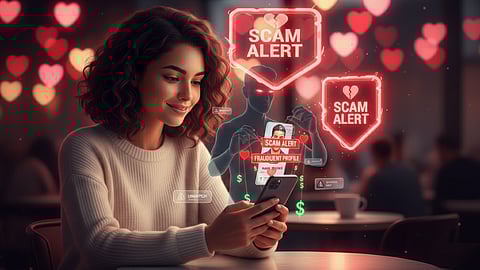


While Valentine’s Day is a time for celebration, it is also when online scams see a rise. Staying alert, avoiding suspicious links, and protecting personal information can help users stay safe during this period.
With Valentine's Day approaching, romance is in the air for several people. However, this is also the time when scammers may plan to take advantage of the situation, especially those who feel lonely or are quick to trust. They befriend victims using fake online profiles and then scam them through romance schemes or payment-related tricks.
As the world celebrates Valentine’s Day, we also need to be very cautious and careful while using the internet in order to avoid getting phished. Here are a few things to always keep in mind and follow to avoid falling for online scams and fraud.

Unknown links are one of the most common ways scammers use to steal personal and financial information. Do not click on any links shared through mass messages, emails, social media platforms, or any other unreliable source that might be offering free gifts or discounts.
Scammers target people using enticing deals, offers, and discounts over calls and messages. It is very important to pay close attention to details in the links shared. These tiny details make a gigantic difference. Most commonly, cybercriminals alter the names of trusted brands and websites. For example, you might see them using amaz0n.in instead of amazon.in, or flipkrt.com instead of flipkart.com.
Cybercriminals often pretend to be offering or delivering free gifts and ask for your personal details such as UPI ID, bank account number, phone number, email address, one-time passwords (OTPs), and/or verification codes. We advise readers never to share any such details with strangers and to stay cautious, as this might be a trick used to lure them and then scam them.
One could never go wrong with choosing to add an additional layer of security. These layers make it harder for scammers to gain any sort of unauthorised access. Thus, it is important that one enables features such as app locks, device-level security settings, and two-factor authentication (2FA) on their phones and emails.
In the event of a fraud or a compromised account, the foremost thing to be done is to report the incident to the concerned authorities. Additionally, readers should note that the incidents can also be reported on the national cybercrime portal or by using the national cybercrime helpline number (1930). The quicker one reports such incidents, the higher the odds of recovering stolen money and preventing further misuse.
At marvelof.com, we spotlight the latest trends and products to keep you informed and inspired. Our coverage is editorial, not an endorsement to purchase. If you choose to shop through links in this article, whether on Amazon, Flipkart, or Myntra, marvelof.com may earn a small commission at no extra cost to you.