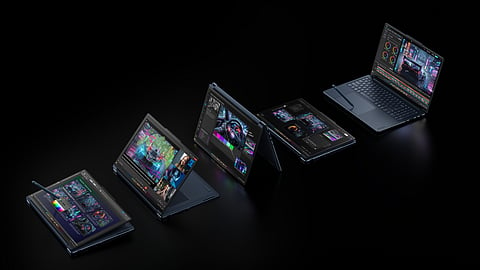

Lenovo Yoga Pro 9n and Yoga 9n 2-in-1 launched in India with NVIDIA RTX Spark.
Photo Credit: Lenovo

Lenovo's Yoga Pro 9n starts at ₹3,19,990 and supports up to 128GB of unified memory; the Yoga 9n 2-in-1 starts at ₹3,54,990 and supports up to 64GB.
Both use NVIDIA RTX Spark for local AI and creative workloads, but software compatibility on Windows on Arm should be checked before buying.
The Pro suits memory-intensive work, while the convertible is aimed at users who need pen input and flexible modes.
Following the launch of the Lenovo ThinkBook 14x earlier this month, the company has announced the new Lenovo Yoga Pro 9n and Yoga 9n 2-in-1, which are equipped with NVIDIA's RTX Spark platform.
While the Lenovo Yoga Pro 9n features a 15.3-inch display, the Yoga 9n 2-in-1 comes with a larger 16-inch display. Both are Gen 11 premium laptops designed for demanding on-device AI workloads, software development and content creation, rather than everyday tasks such as browsing, working with documents or streaming.
The key differentiator is unified memory, which allows the CPU and GPU to share the same memory pool. The Yoga Pro 9n supports up to 128GB, while the Yoga 9n 2-in-1 supports up to 64GB. This makes them worth considering for developers and creators who want to run AI models locally, provided their software is compatible with the platform.
For most users, however, these laptops are difficult to justify at their starting prices. A considerably cheaper laptop will handle everyday productivity and light photo editing without requiring this level of hardware.
The Lenovo Yoga Pro 9n starts at ₹3,19,990 and will be available on Lenovo.com and through select retail outlets across India. The Lenovo Yoga 9n 2-in-1 starts at ₹3,54,990 and will be available exclusively on Lenovo.com.
Both laptops support Lenovo's Customize-to-Order (CTO) options, allowing customers to configure the processor, memory and storage, as well as add accessories before purchasing.
Key Features and Specifications:
According to Lenovo, the RTX Spark platform combines a 20-core Grace CPU with Blackwell RTX graphics and unified memory to deliver up to 1 petaflop of AI performance. Both laptops are designed to run demanding AI workloads locally, including large language models, multi-agent AI frameworks and CUDA software stacks.
The Yoga Pro 9n supports up to 128GB of unified memory, while the Yoga 9n 2-in-1 supports up to 64GB. Unified memory allows the processor and graphics hardware to share a common memory pool, which can be relevant for workloads that require substantial memory capacity.
Lenovo also says its Powerhub and AI Engine+ technologies recognise workloads and route computational tasks to suitable processing units to improve performance and power efficiency.
The platform's capabilities will be most relevant to people who specifically need local AI processing or compatible development and creative tools. Buyers should check that their applications, frameworks and drivers support the platform before making a purchase.

Lenovo Yoga Pro 9n with RTX Spark for local AI workloads.
Photo Credit: Lenovo
The Lenovo Yoga Pro 9n is designed for creators, developers and AI engineers who need a conventional laptop with substantial local computing resources. Its maximum memory configuration of 128GB is a key differentiator for compatible workloads that require a large shared memory pool.
Lenovo positions the laptop for local AI development, high-resolution video editing, 3D rendering, software compilation and RTX gaming. This makes it relevant to people who want to use one system for professional creative work, development and entertainment.
The laptop also features a PureSight Pro OLED display with 100% P3 colour coverage, VESA DisplayHDR True Black 1000 certification and factory Pantone validation. These features are intended to support colour-sensitive creative work.
For buyers who prioritise local computing capability and do not need a convertible design, the Yoga Pro 9n is the more suitable option to consider. The actual configuration matters, however, so check the selected model's memory and other specifications before ordering.
Lenovo Yoga 9n 2-in-1 with a 360-degree hinge and pen support.
Photo Credit: Lenovo
The Lenovo Yoga 9n 2-in-1 combines the RTX Spark platform with a 360-degree convertible design. Users can switch between laptop, tablet, tent, stand and canvas modes depending on whether they are working, drawing or presenting.
Its main differentiator is the dual-surface pen experience. Users can write or draw on the PureSight Pro OLED display or the haptic ForcePad, depending on the task. The included Yoga Pen Gen 2 supports low-latency input, tilt sensitivity, palm rejection and customisable controls.
This setup is intended for tasks such as sketching, annotation, illustration, timeline navigation and detailed editing. The laptop supports up to 64GB of unified memory, compared with the Pro model's 128GB ceiling.
I would consider the Yoga 9n 2-in-1 if pen input and the flexibility of a convertible design are important to my workflow. If those features are not necessary, the Yoga Pro 9n offers a higher memory ceiling at a lower starting price.
Features shared by both Lenovo Yoga laptops
Both laptops include features designed around professional creative work:
PureSight Pro OLED display: Lenovo lists 100% P3 colour coverage, VESA DisplayHDR True Black 1000 certification and factory Pantone validation.
Haptic ForcePad: The touchpad incorporates Wacom digitizer technology and supports 4,096 levels of pressure sensitivity for pen navigation.
Keyboard: Lenovo lists a stain-resistant Yoga silky coat keyboard with 1.5mm key travel.
Rapid Charge Express: Lenovo claims up to three hours of operation from a 15-minute charge. Actual results depend on the stated testing conditions and usage.
These are manufacturer-provided specifications and claims, not independent performance or battery-life test results.
The Yoga Pro 9n is worth considering for AI engineers, developers and creators who need substantial unified memory for compatible local AI, rendering, video editing or development workloads. Its 128GB memory ceiling is the main reason to choose it over the convertible.
The Yoga 9n 2-in-1 is better suited to people who need pen input and a convertible design alongside local AI computing. Its dual-surface input system could be useful for illustration, annotation and other workflows that benefit from direct interaction.
For everyday tasks such as browsing, office applications, streaming and occasional photo editing, these laptops may be more than most users need. At their starting prices, buyers should identify the specific workloads that justify investing in this hardware.
Memory configuration: Check how much unified memory is included in the selected CTO configuration. The 128GB and 64GB figures are maximums.
Application compatibility: Confirm that your AI frameworks, development tools and creative applications support the platform.
Use case: Decide whether you need the Pro's higher memory ceiling or the convertible's dual-surface pen input.
Charging expectations: Treat Lenovo's Rapid Charge Express figure as a manufacturer claim, not a promise of all-day battery life.
Final configuration and price: Check the selected processor, memory, storage and accessories on Lenovo.com before placing an order.
Frequently Asked Questions (FAQs)
What is the price of the Lenovo Yoga Pro 9n in India?
The Lenovo Yoga Pro 9n starts at ₹3,19,990 in India. It is available through Lenovo.com and select retail outlets, subject to configuration and stock availability.
What is the price of the Lenovo Yoga 9n 2-in-1 in India?
The Lenovo Yoga 9n 2-in-1 starts at ₹3,54,990 and is available exclusively through Lenovo.com at launch, according to the launch information.
What is NVIDIA RTX Spark?
NVIDIA RTX Spark combines a Grace CPU, Blackwell RTX graphics and unified memory for workloads such as local AI processing, software development and content creation.
How much memory do the Lenovo Yoga Pro 9n and Yoga 9n 2-in-1 support?
The Yoga Pro 9n supports up to 128GB of unified memory, while the Yoga 9n 2-in-1 supports up to 64GB. Actual memory depends on the selected configuration, and the memory is not user-upgradeable.
Can these Lenovo laptops run AI models locally?
They are designed to support local AI workloads, but the models and tools you can run depend on memory requirements, software support and compatibility with the platform. Check application requirements before buying.
Which Lenovo Yoga laptop should I choose?
Choose the Yoga Pro 9n if you prioritise a higher memory ceiling for compatible AI, development or rendering workloads. Choose the Yoga 9n 2-in-1 if touchscreen use, pen input and convertible modes are important to your work.
Disclaimer: Prices, availability and specifications may change and can vary by configuration. Performance claims are based on manufacturer information and do not guarantee results across all applications. Verify the exact model's specifications, software compatibility, warranty and service coverage with Lenovo before purchasing.
At marvelof.com, we spotlight the latest trends and products to keep you informed and inspired. Our coverage is editorial, not an endorsement to purchase. If you choose to shop through links in this article, whether on Amazon, Flipkart, or Myntra, marvelof.com may earn a small commission at no extra cost to you.


