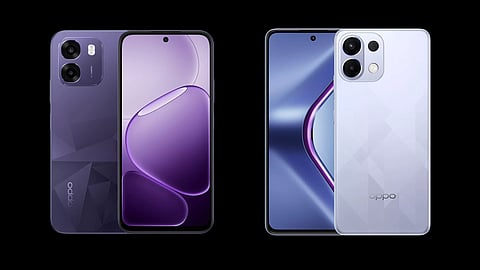

The OPPO K14 5G has been launched as the successor to the OPPO K13 5G.
Photo Credit: OPPO

The OPPO K14 5G has been launched as the successor to the OPPO K13 5G at a starting price of Rs 19,999 for the base variant.
The OPPO K14 5G is powered by the Dimensity 6300 chipset, while the predecessor packs the Snapdragon 6 Gen 4 SoC.
The OPPO K14 5G and OPPO K13 5G are equipped with the same 7,000mAh battery capacity.
Following the launch of he OPPO K14x 5G, the OPPO K14 5G has been announced as the successor to the OPPO K13 5G at a starting price of Rs 19,999 for the base variant. The OPPO K14 5G brings some upgrades over its predecessor, but the key question is what it actually changes compared to the K13 5G. Here's a closer look at the differences in terms of performance, battery, and overall value.
The OPPO K14 5G price in India starts at Rs 19,999 for the 6GB + 128GB variant, while the 6GB + 256GB variant costs Rs 21,999. The top-end 8GB + 256GB storage variant has been launched for Rs 23,999.
On the other hand, the OPPO K13 5G is available on Amazon for Rs 22,999 for the 8GB + 128GB model, while the 8GB + 256GB model is priced at Rs 24,999.
Colour Options & Availability
The OPPO K14 5G has been launched in Prism White, Prism Violet and Icy Blue colours, while the predecessor flaunts Prism Black and Icy Purple colours.
In terms of availability, the OPPO K14 5G and K13 5G areis available via the company's online channel, Flipkart and Amazon.

The OPPO K14 5G has a 6.75-inch display compared to the 6.67-inch display on the predecessor.
The OPPO K14 5G is powered by the Dimensity 6300 chipset, while the predecessor packs the Snapdragon 6 Gen 4 SoC.
The 16MP selfie sensor on the predecessor has been downgraded to an 8MP selfie camera.
The 80W charging support has been downgraded to 45W.
The OPPO K14 5G has an IP69 rating, whereas the OPPO K13 5G has an IP65 rating.
The OPPO K14 5G has a 50MP + 2MP dual rear camera setup, similar to the K13 5G.
The successor retains the same 7,000mAh battery, similar to the predecessor.
While the OPPO K14 5G boasts a slightly bigger display and than the OPPO K13 5G, it has reduced peak brightness. To recall, the K13 5G was launched with 1,200 nits peak brightness, whereas the K14 5G offers up to 1,125 nits peak brightness. This means the brightness levels on the OPPO K14 5G may impact outdoor visibility, although the difference is unlikely to be significant in everyday use.
OPPO K14 5G: Slightly larger display, better for users who prefer a bigger screen.
OPPO K13 5G: Higher peak brightness, better for outdoor visibility.
The MediaTek Dimensity 6300 chipset on the OPPO K14 5G sits lower than the Snapdragon 6 Gen 4 SoC on the OPPO K13 5G.
Looking at the performance of both chipsets, it can be said that the Snapdragon 6 Gen 4 chipset, which is built on an advanced 4nm process, is noticeably better than the Dimensity 6300, built on a 6nm process.
In real-world tests, the Snapdragon 6 Gen 4 scores higher in benchmarks, at around 680,000 to 800,000 on AnTuTu, compared to the Dimensity 6300's 420,000 to 530,000.
While both chipsets can perform daily tasks like browsing, social media, and light gaming, the Snapdragon 6 Gen 4 chipset can offer smoother performance overall with less lag or overheating while playing heavier games.
OPPO K14 5G: Dimensity 6300, suitable for basic use and light gaming.
OPPO K13 5G: Snapdragon 6 Gen 4, better for smoother performance and heavier tasks.
The OPPO K14 5G and OPPO K13 5G are equipped with the same 7,000mAh battery capacity, offering competition to several phones with 7,000mAh batteries in the market, such as the Motorola Edge 70 Fusion, Moto G67 Power, OnePlus Nord CE 5 5G, or Realme P4.
In general, on a single charge, a 7,000mAh battery can last for up to 2 to 3 days with average to moderate usage. Meanwhile, it can offer around 12 to 21 hours of continuous activities like gaming or video streaming for intensive users.
However, the irony is that the OPPO K14 5G comes with 45W fast charging support compared to 80W charging support available on the OPPO K13 5G.
This means the newer model will take longer to charge, making it less convenient for users who spend most of their time on their phone, as they will have to charge the device more frequently.
OPPO K14 5G: Same 7,000mAh battery, but slower 45W charging.
OPPO K13 5G: Same 7,000mAh battery, faster 80W charging.
The OPPO K14 5G and OPPO K13 5G are equipped with the same 7,000mAh battery capacity.
Photo Credit: OPPO
Like the OPPO K13 5G, the OPPO K14 5G is equipped with the same 50MP main camera and a 2MP secondary camera. Notably, this camera setup is not very unique, but is standard for a phone in the Rs 19,000 segment.
However, the bad part is that the K14 5G opts for an 8MP selfie sensor compared to a 16MP front camera on the predecessor. This downgrade is likely to impact selfie quality, especially in terms of detail and low-light performance.
OPPO K14 5G: Same rear camera setup, but downgraded 8MP front camera, less suitable for selfies.
OPPO K13 5G: Same rear camera setup, better 16MP front camera, more suitable for selfies.
The OPPO K14 5G offers an upgraded IP69 rating, offering higher protection against dust and water. It can handle high-pressure water jets and even hot water. Meanwhile, the OPPO K13 5G has an IP65 rating. It is also dust-tight, but only protected against low-pressure water jets. It's fine for light splashes or rain, but not built for harsher exposure.
Notably, the OPPO K14 5G is significantly more durable when it comes to water and dust resistance, especially in tougher environments.
OPPO K14 5G: Better protection against dust, high-pressure water, and harsher conditions.
OPPO K13 5G: Suitable for basic dust protection and light splashes.
Compared to the predecessor, the OPPO K14 5G offers a few upgrades, such as a larger display and an improved IP69 rating, but it also includes some noticeable downgrades, such as its chipset, selfie camera, and charging speed.
Notably, the OPPO K13 5G offers better performance, faster charging, and a more capable front camera. Therefore, the OPPO K14 5G does not feel like a clear upgrade over the OPPO K13 5G.
The OPPO K14 5G can be a good option for users who prioritise durability and a slightly bigger display, while the OPPO K13 5G is better for those looking for stronger performance, faster charging, and better overall value.
What are the price differences between the OPPO K14 5G and K13 5G variants?
The OPPO K14 5G starts at Rs 19,999 for the 6GB + 128GB variant, with higher variants priced up to Rs 23,999. The OPPO K13 5G is priced higher, at Rs 22,999 for the 8GB + 128GB model and Rs 24,999 for the 8GB + 256GB model. Overall, the K14 5G offers more affordable base models.
Are there any differences in color options and availability for the OPPO K14 5G and K13 5G?
Yes, the OPPO K14 5G is available in Prism White, Prism Violet, and Icy Blue colors, whereas the OPPO K13 5G offers Prism Black and Icy Purple color options. Both phones are available online via OPPO's official channels, Flipkart, and Amazon.
How do the IP ratings impact durability for these phones?
The OPPO K14 5G has an improved IP69 rating, which means it can withstand high-pressure water jets and hot water, offering significantly better dust and water resistance. The OPPO K13 5G has an IP65 rating, suitable for dust protection and light splashes but not harsh conditions.
Which phone is recommended for users prioritizing durability over performance?
Users seeking durability and better water and dust resistance should consider the OPPO K14 5G with its IP69 rating and larger display. However, for those prioritizing processing power, faster charging, and better front camera quality, the OPPO K13 5G remains the better choice.
Should I upgrade from OPPO K13 5G to K14 5G based on features and value?
While the OPPO K14 5G offers a larger screen and better IP69 durability, it includes notable downgrades such as a less powerful chipset, slower charging, and a lower-resolution selfie camera. If performance, faster charging, and selfie quality are priorities, the OPPO K13 5G remains the better choice for value.
At marvelof.com, we spotlight the latest trends and products to keep you informed and inspired. Our coverage is editorial, not an endorsement to purchase. If you choose to shop through links in this article, whether on Amazon, Flipkart, or Myntra, marvelof.com may earn a small commission at no extra cost to you.